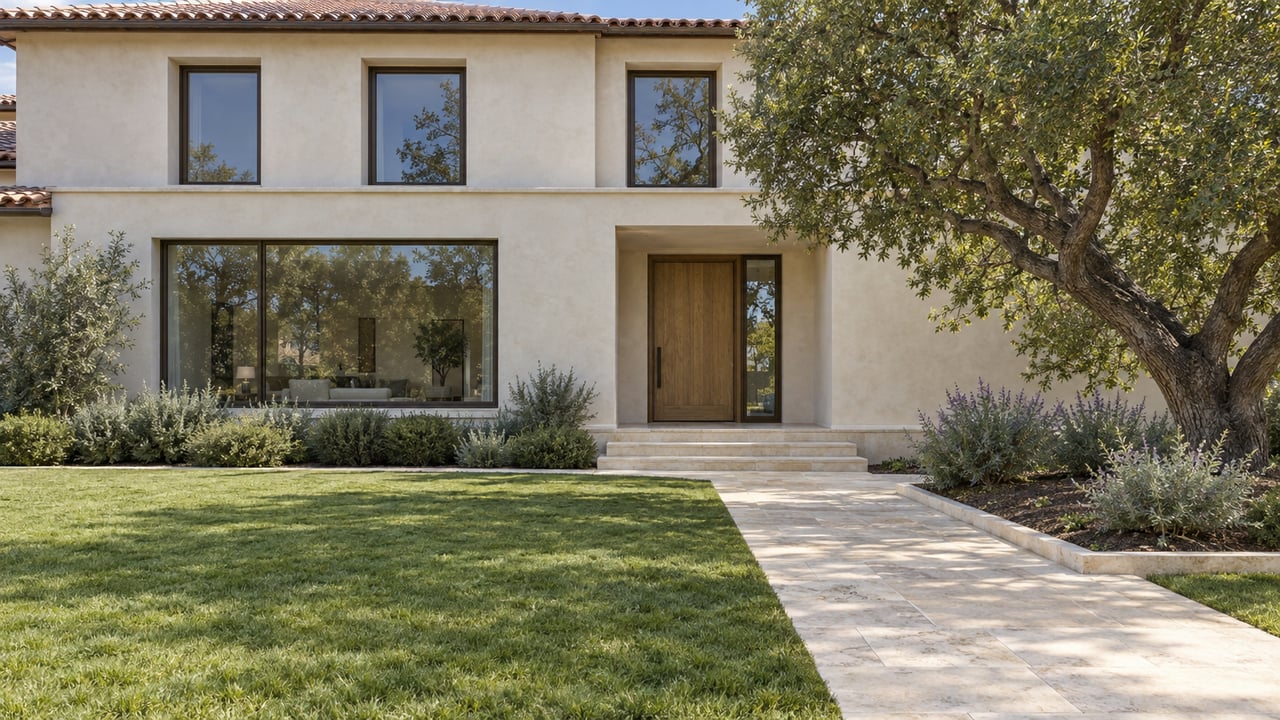
Pacific Palisades Measure ULA Exemption: Who Would Prop TE Cover?
October 15, 2026
October 15, 2026
The clause that matters most in Proposition TE is not its five-year window or its refund provision. It is subsection (a)(4) of the proposed ordinance, which limits the exemption to a seller who "was the owner or owners of the residential property" on January 7, 2025, the day the Palisades Fire began. Most coverage calls it a Measure ULA exemption for Pacific Palisades. The ballot text describes something narrower. The relief goes to a person, not a place, and it can be used once.
Los Angeles voters decide on November 3. If the measure passes, two identical parcels on the same street could carry very different transfer-tax costs depending on who signs the deed. That gap shows up most in rebuilt homes, not in the lots themselves.
The full text of Proposition TE would add Section 21.9.17 to the Municipal Code. A sale is exempt from the ULA tax only when every condition holds:
The exemption would cover sales from January 7, 2025 through January 6, 2030. The text sets no neighborhood boundary and no ZIP code. Eligibility depends on verified fire damage to a residential property within the City of Los Angeles. It is not limited to owner-occupants. The Los Angeles Times voter guide says it "applies to all residential properties, whether or not their owners lived there."
Conditions four and five work together. A developer who buys a burned lot in 2026 fails condition four the moment they own it. The seller who sold them the lot may have used up the exemption on that sale. Either way, a builder's eventual sale of the finished house falls under the ordinary ULA rules.
The owner clause matters because of how Measure ULA is calculated. The ordinance sets the tax as a percentage "of the consideration or value," meaning the whole sale price, not just the part above the threshold. For transactions closing after June 30, 2026, the city's Measure ULA FAQ lists 4% above $5,400,000 and 5.5% at or above $10,900,000. The thresholds are indexed annually to the Chained Consumer Price Index. Both rates sit on top of the city's 0.45% base transfer tax, for combined rates of 4.45% and 5.95%. By custom the seller pays transfer tax in Los Angeles, though the parties can negotiate it.
Here is how that works out at current rates:
| Sale price | Base city tax at 0.45% | ULA under current rules | Seller's price after both |
|---|---|---|---|
| $5,390,000 | $24,255 | $0 | $5,365,745 |
| $5,500,000 | $24,750 | $220,000 | $5,255,250 |
| $6,000,000 | $27,000 | $240,000 | $5,733,000 |
| $14,000,000 | $63,000 | $770,000 | $13,167,000 |
The $6 million row matches the example in the Los Angeles Times voter guide. The first two rows show the cliff. A sale $110,000 higher leaves the seller about $110,000 less. Prop TE would only remove the ULA column, and only for qualifying sellers. The 0.45% base tax is a separate levy, and the measure does not address it.
For most burned lots, the cliff never comes into play. According to Palisadian-Post market analysis published August 14, 2026, roughly 82% of 2026 land sales in 90272 had closed between $1 million and $3 million. Above $5 million, the land market had 14 active lots and only three sales so far this year. Some lots have crossed the line. The Real Deal reported a burned lot at 14948 Camarosa Drive selling for more than $7 million in March, one at 906 Glenhaven Drive for $6.6 million in February, and one at 15300 Antioch Street for $5.9 million in July. All three homes were destroyed in the fire. They are the exception in a land market concentrated well below $5.4 million.
So the lot market is where Prop TE matters least. The finished-house market is where it matters most.
Agents quoted by The Real Deal in September put the cheapest lot in a "good area" at around $1.5 million, plus another $3.5 million to $4 million to build. Land plus construction alone comes to $5 million to $5.5 million before carrying costs or any margin. A finished home priced to recover that sits at or above the ULA threshold. New construction is already being priced that way. 837 Muskingum Avenue was set to list just under $14 million, with the price based on replacement cost rather than pre-fire value.
Builders have concentrated in the flat Alphabet Streets around Palisades Village, where lots are easier to build on and the numbers work for a finished sale. Under Prop TE, every one of those builder sales above $5.4 million would still carry ULA, because the builder was not the owner on January 7, 2025.
A fire-day owner who rebuilds and then sells is treated differently on paper. The ordinance has no "as-is" requirement and does not exclude a rebuilt residence. The City Administrative Officer's financial-impact estimate of $35 million to $66 million in lost ULA revenue through January 2030 was built partly on "the number of rebuilt homes listed for sale as of July 2026." Take two new houses of similar size, each priced at $8 million, on comparable Alphabet Streets lots. If the measure passes, the builder's sale would owe $320,000 in ULA. The original owner's sale would appear to owe nothing.
That changes the comparison for an original owner weighing whether to sell the lot or finish a rebuild. Selling the lot at $2 million never reached ULA anyway. Rebuilding and selling the finished home is the route where the exemption has real value. It also brings the deadline into play. Pacific Palisades passed 1,000 construction starts on August 12, 2026, and 35 primary residences had certificates of occupancy as of August 13. A rebuild has to be designed, permitted, built and closed by January 6, 2030 to qualify. From today, that is a little over three years.
For a buyer, the owner clause adds a new question to ask about any listing. Two sellers asking the same price may face very different tax costs at closing. That affects how much room each one has to negotiate.
The measure's reach into the past is wider than its reach into the future. Section 21.9.17(d) lets the Director of Finance issue refunds for ULA already paid, and the usual refund time limits would not start until the measure takes effect. Refunds would go to sales that meet all six conditions listed above. A seller who closed above the threshold since the fire would need to have owned the residential property on January 7, 2025, have its fire damage verified, not have used the exemption on that property before, and not qualify for some other ULA exemption. At current rates, a $5.9 million sale carries $236,000 in ULA, and a $6.6 million sale carries $264,000. The public reporting on the Camarosa, Glenhaven and Antioch sales does not say whether those sellers owned the properties on the fire date. The math only shows how much is at stake for a qualifying seller.
The ballot text sends refund claims through the existing procedure in LAMC §21.9.10. The research turned up no claim form specific to Prop TE.
Several things will still be unsettled after November 3, whichever way it goes.
Does Prop TE apply if I bought a Palisades lot after the fire? Not to your own resale, as written. Condition four requires the seller to have owned the property on January 7, 2025.
Does it remove all transfer tax on a qualifying sale? It addresses the ULA tax. The city's 0.45% base transfer tax is a separate levy that the measure does not mention.
When would it take effect? The City Clerk's impartial summary says it takes effect if a majority of voters approve it. Its operative window runs back to January 7, 2025.
If you owned a Palisades property on January 7, 2025, and are comparing a lot sale with a rebuild, or if you're looking at new construction and want to know which sellers carry which tax costs, Stephen Apelian can go through the construction budget, the 2030 deadline and the ULA math with you. Let's Connect.
This article is general information, not legal, tax or financial advice. Consult a qualified professional about your situation.
Stay up to date on the latest real estate trends.


Whether buying, selling, or investing in California or Texas, trust Stephen Apelian’s expertise, market knowledge, and proven results to guide your next move.